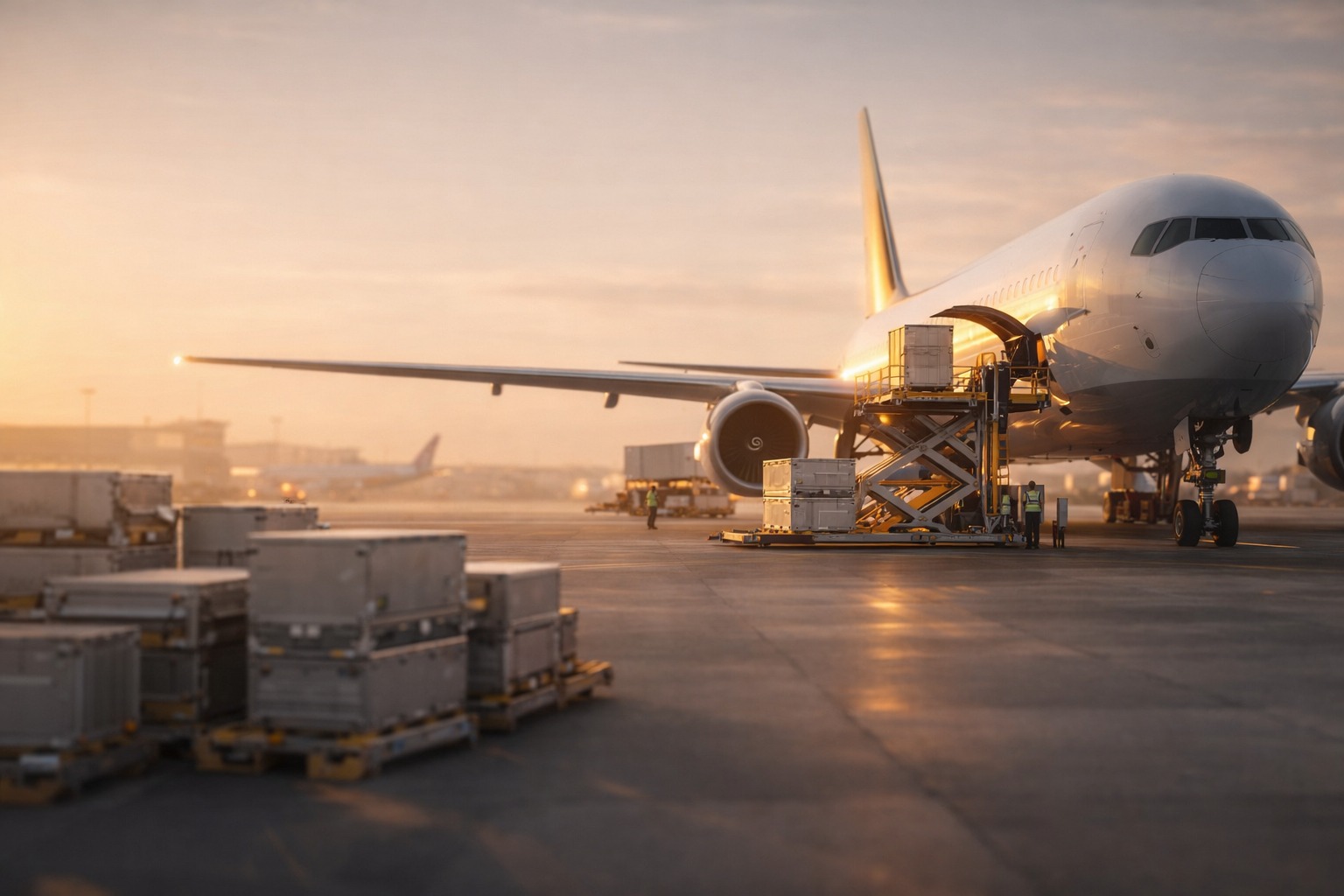
Top Benefits of International Air Freight Services for Fast and Secure Delivery
Top Benefits of International Air Freight Services for Fast and Secure Delivery
International air freight services are specialized logistics solutions that transport goods across international borders via air. They offer the fastest transit times available in global trade, making them the preferred choice for time-sensitive, high-value, or perishable shipments. Whether you are an SME entering a new market or a large enterprise managing a complex supply chain, understanding how air freight works can significantly improve your logistics decisions.
What Are International Air Freight Services?
International air freight services refer to the end-to-end movement of cargo between countries using commercial or cargo aircraft. These services typically cover:
- Origin pickup
- Export documentation and customs clearance
- Airline booking and cargo uplift
- Destination customs clearance
- Final-mile delivery
Unlike ocean freight, which prioritizes volume and cost, air freight cargo services prioritize speed and reliability. Goods that might take weeks by sea can reach their destination in 24 to 72 hours by air — a critical advantage for industries where timing directly impacts revenue or safety.
Air freight shipping services are managed by freight forwarders who coordinate between shippers, airlines, customs authorities, and ground handlers to ensure seamless movement of cargo from one point to another.
Types of Air Freight Services
Understanding the different types of air freight services helps businesses choose the right option based on cargo type, urgency, volume, and budget.
Consolidation Services
Consolidation is one of the most practical types of air freight services for small and medium-sized businesses. In this model, cargo from multiple shippers is grouped together into a single consignment, allowing each shipper to pay only for the space their goods occupy.
This approach removes the traditional cost barrier associated with air freight. SMEs gain access to reliable international networks, predictable transit times, and simplified documentation without committing to a full cargo charter.
Example: A Mumbai-based garments exporter shipping 200 kg to Frankfurt can consolidate their cargo with other India-Europe shipments, gaining competitive transit without booking full aircraft capacity.
Priority & Time-Critical Air Freight Shipping Services
Some shipments simply cannot wait. Priority air freight shipping services are designed for cargo where delays have serious financial, operational, or safety consequences.
Common examples include:
- Pharmaceuticals and vaccines requiring strict temperature control throughout transit
- Aircraft on Ground (AOG) spares needed immediately to restore aircraft operations
- High-value electronics with short product life cycles
- Medical devices required for urgent clinical use
- Perishable goods such as fresh produce and seafood with limited shelf life
Specialised Cargo Air Freight Services
Not all cargo fits standard airline configurations. Specialised air freight cargo services handle complex, regulated, or oversized shipments that require additional expertise, equipment, and compliance protocols.
This category includes:
- Dangerous Goods (DG): Chemicals, flammable substances, and other regulated materials transported in full compliance with IATA Dangerous Goods Regulations (DGR)
- Temperature-controlled cargo: Pharmaceutical products, clinical trial materials, biologicals, and fresh produce requiring cold-chain integrity
- Oversized and heavy cargo: Industrial machinery, manufacturing equipment, and infrastructure components that exceed standard freight dimensions
- Project cargo: Large-scale consignments for power generation, construction, or oil and gas projects
- High-value goods: Precision instruments, luxury products, and advanced electronics requiring secure and accountable handling
Door-to-Door Air Freight Delivery Services
Door-to-door air freight delivery services provide complete end-to-end logistics coverage. A single service provider manages origin pickup, export customs clearance, international air transport, destination customs clearance, and last-mile delivery to the consignee’s premises.
Technology-Enabled Air Freight Transport Services
Modern air freight transport services are increasingly powered by digital platforms that give shippers visibility and control over their cargo in real time.
Key capabilities include:
- Live shipment tracking with automated alerts at each milestone
- Direct airline integrations for real-time booking, flight schedules, and capacity updates
- Business intelligence dashboards that consolidate operational data, KPI monitoring, and exception management
- Electronic documentation for faster customs processing and reduced paperwork
Key Benefits of Air Freight Cargo Services
Air freight cargo services offer a distinct set of advantages compared to other modes of transport:
| Benefit | Description |
|---|---|
| Speed | Transit times measured in hours or days, not weeks |
| Reliability | Airlines operate on fixed schedules, ensuring predictable service |
| Security | Stringent airport protocols reduce theft, tampering, or damage |
| Global Reach | Major air cargo gateways connect virtually every major trade market |
| Reduced Inventory Costs | Faster transit enables leaner safety stocks |
| Cargo Integrity | Controlled handling and shorter transit reduce damage or spoilage |
Industries That Use Worldwide Air Freight Services
Worldwide air freight services support a wide range of sectors that depend on speed, precision, or global access:
- E-commerce: High-volume, consumer-facing shipments requiring rapid cross-border fulfillment
- Healthcare & Pharmaceuticals: Temperature-controlled, time-critical medical supplies, vaccines, and clinical materials
- Consumer Durables & Electronics: Products with short market windows and high commercial value
- Automotive: Critical spare parts and components that prevent costly production downtime
- FMCG & Perishables: Fresh produce, food products, and fast-moving consumer goods with strict shelf-life requirements
- Lifestyle, Fashion & Apparel: Seasonal merchandise with launch-driven timelines
- Industrial & Engineering: Specialised machinery, components, and project cargo
- Retail: Replenishment shipments during high-demand periods
How Air Freight Services Work: Step-by-Step
- Shipment enquiry and rate confirmation — Provide cargo details (dimensions, weight, nature of goods, origin, destination) to your freight forwarder for a rate quote
- Booking — The forwarder confirms space with an airline and issues an Air Waybill (AWB)
- Origin pickup and packing — Cargo is collected, packed to airline specifications, and labeled correctly
- Export customs clearance — Required documentation is submitted to customs authorities; duty and tax obligations are confirmed
- Cargo acceptance at airport — Cargo is handed over to the airline’s cargo handling agent at the origin gateway
- Flight and transit — Cargo is uplifted on the confirmed flight; connecting flights are arranged where necessary
- Destination clearance — Import customs documentation is filed at the destination country; duties and taxes are settled
- Last-mile delivery — Cargo is released from the destination airport and delivered to the consignee’s address
What to Look for in a Reliable Air Freight Service Provider
Choosing the right freight air services partner directly impacts the reliability of your supply chain. Key factors to evaluate:
- Network coverage: Does the provider have on-ground presence at your key trade lanes and destinations?
- Airline relationships: Performance-based agreements with carriers ensure priority access to capacity
- Specialised capabilities: Can the provider handle your specific cargo type — DG, temperature-controlled, oversized, or high-value?
- Technology platform: Does the provider offer real-time tracking, proactive exception alerts, and digital documentation?
- Compliance expertise: Is the provider equipped to manage regulatory requirements at both origin and destination?
- Track record: Look for demonstrated experience across multiple industries and international trade lanes
Legal and Regulatory Considerations for Air Freight in India (Maharashtra Focus)
Businesses shipping internationally from Maharashtra — one of India’s leading export hubs — must navigate several regulatory frameworks:
- DGFT (Directorate General of Foreign Trade): An Importer Exporter Code (IEC) is mandatory for all international shipments from India
- CBIC Customs: All exports and imports are governed by the Customs Act, 1962
- IATA Dangerous Goods Regulations (DGR): For any restricted or hazardous material, compliance with IATA DGR is mandatory
- FSSAI for food exports: Perishable food products require FSSAI compliance and may be subject to phytosanitary or health certificates
- RBI FEMA regulations: Foreign exchange transactions must comply with Foreign Exchange Management Act (FEMA) guidelines
- MAEEZ (Maharashtra Airport Export Economic Zone): Exporters in Maharashtra may benefit from Special Economic Zone (SEZ) schemes
Practical tip for Maharashtra exporters: Engage a licensed Customs House Agent (CHA) alongside your freight forwarder to ensure correct filing of documents and reduce the risk of cargo holds or penalties.
Frequently Asked Questions (FAQs)
Q1. What is international air freight? International air freight is the commercial transportation of goods across international borders using aircraft. It covers the full logistics chain from origin pickup to destination delivery, including customs clearance and documentation.
Q2. What are the main types of air freight services? The main types include consolidation (groupage), full-cargo charter, priority/express freight, specialised cargo handling (for DG, pharmaceuticals, oversized goods), and door-to-door delivery services.
Q3. How long does international air freight take? Transit times typically range from 1 to 5 business days depending on origin, destination, flight connectivity, and customs clearance. Priority services can reduce this to 24–48 hours for key routes.
Q4. What documents are required for air freight shipments from India? Standard export documents include: Commercial Invoice, Packing List, Air Waybill (AWB), Shipping Bill, Certificate of Origin (where required), and commodity-specific certificates (e.g., FSSAI for food, health certificates for pharma).
Q5. What is the difference between air freight and air express? Air express (e.g., courier services) handles small parcels and documents with door-to-door delivery on fixed networks. Air freight handles larger commercial consignments with more flexible routing, cargo configurations, and specialized handling options.
Q6. Can dangerous goods be shipped via air freight? Yes, but only by licensed freight forwarders with IATA DGR-certified staff. Dangerous goods must be classified, packed, labeled, and documented exactly as per IATA Dangerous Goods Regulations.
Q7. What is an Air Waybill (AWB)? An Air Waybill is the primary shipping document in air freight. It serves as a contract of carriage between the shipper and the airline, a receipt of goods, and a customs declaration.
Q8. How is air freight cargo tracked? Modern air freight service providers offer digital tracking platforms that provide real-time updates at each shipment milestone from cargo acceptance at origin to arrival at destination.
Q9. Is air freight suitable for perishable goods? Yes. Air freight is one of the most effective modes for perishables because of its speed and controlled handling environments. Many providers offer temperature-controlled solutions compliant with IATA CEIV Pharma or IATA CEIV Fresh standards.
Q10. How do I choose a reliable air freight service provider in India? Evaluate providers based on their network coverage, airline partnerships, specialised cargo capabilities, technology platform, compliance expertise, and demonstrated performance across your target trade lanes.
This article is intended for informational purposes. Regulatory requirements are subject to change. Always consult a licensed Customs House Agent (CHA) or legal advisor for compliance guidance specific to your business and shipment profile.