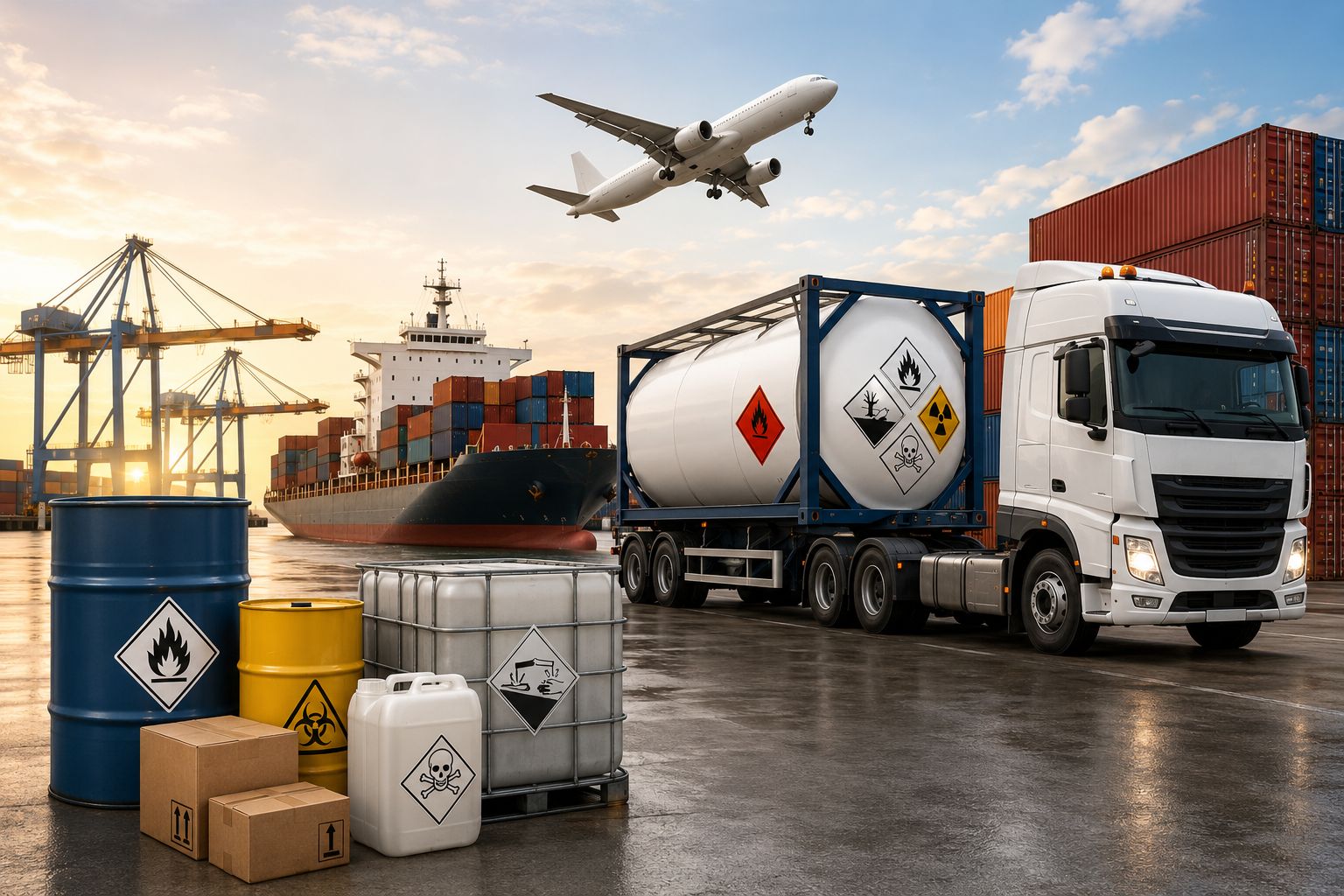
Dangerous Goods Logistics Services | Safe & Compliant Hazardous Cargo Transportation
Dangerous Goods Logistics Services: A Complete Guide to Safe and Compliant Hazardous Cargo Transportation
Dangerous goods logistics services involve the specialised handling, documentation, packaging, and transportation of materials classified as hazardous under international aviation and transport regulations. Whether you are shipping lithium batteries, industrial chemicals, or biological substances, compliance and expert management are non-negotiable requirements for every shipment.
What Are Dangerous Goods and Why Do They Require Specialised Logistics?
Dangerous goods (DG) are materials or substances that pose a risk to health, safety, property, or the environment during transportation. The International Air Transport Association (IATA) classifies goods as dangerous based on the potential consequences of mishandling — not just how commonly they are used.
Some everyday items fall under this category. Smartphones, laptops, and power banks qualify as dangerous goods because of their lithium-ion batteries. So do perfumes, paints, aerosols, dry ice, and genetically modified organisms. This wide range is precisely why dangerous goods handling services require dedicated expertise rather than standard freight processes.
The Nine Classes of Dangerous Goods
IATA organises dangerous goods into nine primary classes:
- Class 1 – Explosives
- Class 2 – Gases (flammable, non-flammable, toxic)
- Class 3 – Flammable liquids
- Class 4 – Flammable solids
- Class 5 – Oxidising substances and organic peroxides
- Class 6 – Toxic and infectious substances
- Class 7 – Radioactive material
- Class 8 – Corrosive substances
- Class 9 – Miscellaneous dangerous substances (including lithium batteries)
Each class and subclass carries specific documentation, packaging, and labelling requirements. A shipment processed under the wrong subclass can result in cargo rejection, regulatory penalties, or serious safety incidents.
How Dangerous Goods Air Freight Works
Dangerous goods air freight follows a highly structured process governed by IATA’s Dangerous Goods Regulations (DGR) and the International Civil Aviation Organization (ICAO) Technical Instructions. Unlike general cargo, DG shipments require several additional steps before they can be loaded onto an aircraft.
Step 1 – Classification and Identification
The shipper or a certified logistics partner identifies the correct UN number, proper shipping name, and hazard class for the material. Incorrect classification is one of the leading causes of DG shipment rejections.
Step 2 – Packaging
Packaging must comply with specific UN-certified standards based on the material’s class and packing group. Inner and outer packaging, absorbent materials, and quantity limits all vary by substance type.
Step 3 – Labelling and Marking
Each package must carry the correct hazard labels, handling marks, and the shipper’s and consignee’s information. Labels are class-specific and must meet minimum size and colour standards.
Step 4 – Documentation
A Shipper’s Declaration for Dangerous Goods is the primary document required for all DG air shipments. It must be completed in detail, signed by a trained individual, and accompany the shipment throughout transit. Errors in documentation — even minor ones — can ground a shipment entirely.
Step 5 – Acceptance and Screening
Airlines and cargo handlers conduct acceptance checks to verify that the packaging, labelling, and documentation are correct before the cargo is processed for loading.
Step 6 – Transport and Delivery
Once accepted, the shipment moves through the air freight network under controlled conditions. For certain materials, airlines apply specific quantity limits per aircraft or restrict carriage on passenger flights entirely.
Dangerous Goods Compliance: The Regulatory Framework in India and Maharashtra
Dangerous goods compliance in India is governed by a combination of international regulations and domestic rules:
- IATA Dangerous Goods Regulations (DGR) – Updated annually and mandatory for all air freight.
- ICAO Technical Instructions – The global baseline for aviation safety.
- Directorate General of Civil Aviation (DGCA) – India’s aviation regulator, which enforces DG standards at all domestic and international airports including Chhatrapati Shivaji Maharaj International Airport (CSIA) in Mumbai.
- The Explosives Act, 1884 and Hazardous Waste Rules – Domestic legislation governing storage and movement of specific classes.
- Maharashtra Pollution Control Board (MPCB) – Oversees environmental compliance for hazardous materials generated or transported within Maharashtra.
Businesses in Maharashtra, particularly those in pharmaceutical manufacturing (Pune, Aurangabad), chemical processing (Thane, Raigad), and electronics (Mumbai, Nashik), regularly deal with DG cargo. Non-compliance with DGCA norms can result in shipment detention at CSIA, financial penalties, or suspension of cargo handling privileges.
Practical Tip for Maharashtra Shippers: Before dispatching DG cargo from Mumbai, ensure that your logistics partner holds current IATA DGR certification and is familiar with CSIA’s specific acceptance procedures and restricted commodity lists.
End-to-End Dangerous Goods Transportation: What a Reliable DG Logistics Company Provides
A capable DG logistics company goes beyond simply moving cargo from one point to another. The full scope of hazardous material logistics covers:
Expert Guidance from the Start
From the moment a shipper decides to move DG cargo, a trained team should be available to advise on classification, packaging options, airline restrictions, and documentation requirements. Waiting until the shipment is ready often causes delays and errors.
IATA DGR-Certified Documentation
Officials responsible for preparing the Shipper’s Declaration and associated paperwork must hold valid IATA DGR certification. Certification requires passing rigorous examinations and must be renewed regularly to ensure handlers remain current with regulation changes, which IATA updates every year.
Secure Infrastructure
Facilities for temporary storage of DG cargo must meet specific construction and safety standards — proper ventilation, segregation from incompatible goods, fire suppression systems, and controlled access. These requirements protect both personnel and the surrounding environment.
Customs Clearance
Hazardous cargo transportation often involves import or export, which adds a customs clearance layer. A knowledgeable team handles customs documentation in alignment with DG declarations to avoid discrepancies that hold up clearance.
Real-Time Monitoring and Communication
Proactive tracking and communication ensure that shippers are informed at each stage. For time-sensitive industries like pharmaceuticals or manufacturing, even a short delay can have significant downstream consequences.
Real-World Scenario: Shipping Lithium Batteries from Pune to Frankfurt
Consider a medical device manufacturer in Pune exporting devices powered by lithium-ion batteries to a distributor in Germany. Under IATA Class 9, the batteries must be packed at no more than 30% state of charge, placed in UN 3481-approved packaging, labelled with the lithium battery handling mark, and accompanied by a correctly completed Shipper’s Declaration.
If the manufacturer uses a standard freight forwarder unfamiliar with DGR, the shipment risks rejection at CSIA, which delays delivery, incurs storage charges, and potentially breaches the supply agreement with the German distributor. With a specialised DG cargo service, this scenario is avoided through pre-shipment checks, proper packaging supply, and certified documentation preparation.
Key Benefits of Using Specialised Dangerous Goods Shipping Services
- Regulatory confidence – Certified professionals ensure every shipment meets IATA, ICAO, and DGCA requirements.
- Reduced risk of rejection – Pre-acceptance checks identify issues before the cargo reaches the airline counter.
- Protection from penalties – Correct documentation and handling prevent fines and shipment detentions.
- Supply chain continuity – Consistent processes reduce delays and protect business relationships.
- Environmental and personnel safety – Proper handling minimises risk of incidents during transit and storage.
Verification Steps Before Choosing a DG Logistics Partner
Before entrusting your hazardous cargo to a logistics provider, verify the following:
- IATA DGR Certification – Ask for copies of current certificates for the team handling your documentation.
- Airline Acceptance History – A reliable partner will have an established track record with major airlines.
- Infrastructure Compliance – Check whether their facilities meet DG storage standards.
- Experience by Class – Ensure they have handled shipments in your specific DG class, not just general experience.
- Customs Clearance Capability – Confirm they can handle both export and import DG documentation.
- Recurrent Training Records – Regulations change annually. Ask how often their team is retrained.
Frequently Asked Questions (FAQ)
What qualifies as a dangerous good for air freight?
Dangerous goods for air freight are substances or articles that IATA has determined may pose a risk to aircraft, passengers, or crew. The category includes flammable liquids and gases, explosives, toxic substances, radioactive materials, corrosives, and even common items like lithium batteries, aerosols, and dry ice.
Can dangerous goods be transported on passenger aircraft?
Some dangerous goods are permitted on passenger aircraft, but in restricted quantities and packaging. Others are limited to cargo aircraft only. Certain substances — such as toxic gases or high-activity radioactive materials — are forbidden entirely. The applicable rules depend on the specific substance and its classification under IATA DGR.
What documents are required for dangerous goods air freight?
The primary document is the Shipper’s Declaration for Dangerous Goods (also known as the DG Declaration or DGD). Additional requirements may include a Material Safety Data Sheet (MSDS), airway bill, commercial invoice, and packing list. All documentation must be class and subclass specific.
What is IATA DGR certification and why does it matter?
IATA DGR (Dangerous Goods Regulations) certification is a qualification awarded to individuals who have passed IATA’s examination on the safe transport of dangerous goods by air. Certified personnel are trained to correctly classify, document, and prepare DG shipments in compliance with international standards. It must be renewed every two years.
What happens if dangerous goods are incorrectly declared?
Incorrect declaration of dangerous goods is considered an offence under ICAO and IATA regulations. Consequences can include rejection at the point of acceptance, cargo offloaded mid-transit, financial penalties, suspension of shipping privileges, and in serious cases, legal liability if an incident occurs due to the misdeclaration.
How are dangerous goods regulated at Mumbai Airport (CSIA)?
CSIA operates under DGCA regulations and follows IATA DGR standards. All DG shipments must be accepted through designated cargo terminals equipped to handle hazardous materials. The DGCA periodically audits cargo handlers and airlines for DG compliance. Shippers in Maharashtra should work with logistics partners familiar with CSIA-specific procedures.
What is the difference between dangerous goods and hazardous materials?
The terms are largely interchangeable, but there is a regulatory distinction in context. “Dangerous goods” is the term used predominantly in aviation (IATA/ICAO), while “hazardous materials” (HAZMAT) is more commonly used in road and sea transport regulations, particularly under US DOT rules. The classification criteria and packing standards differ slightly between modes, so mode-specific compliance is essential.
Can a business handle its own DG documentation?
Businesses can prepare their own DG declarations, but only if the individual signing the declaration holds a valid IATA DGR certificate for the relevant function (shipper category). Given the complexity and annual regulatory updates, most businesses find it more reliable to work with a specialised dangerous goods logistics services provider whose team maintains current certification.
Conclusion
Transporting dangerous goods by air is one of the most regulated and risk-sensitive activities in global logistics. The consequences of non-compliance — from shipment rejection to environmental incidents — are significant for businesses of any size. A structured approach built on IATA DGR-certified expertise, compliant infrastructure, accurate documentation, and end-to-end coordination makes the difference between a smooth operation and a costly disruption.
For businesses in Maharashtra and across India engaged in the movement of hazardous cargo, working with a knowledgeable DG logistics company is not simply a convenience — it is a fundamental requirement for safe, legal, and efficient operations.